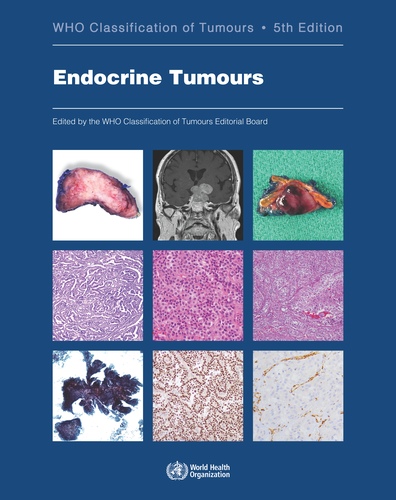
Dyshormonogenetic goiter of the thyroid gland.

Thompson LD.
Ear Nose Throat J. 2005 Apr;84(4):200.
FIRST PARAGRAPH: Dyshormonogenetic goiter is the name given to a family of inborn errors of metabolism that lead to defects in the synthesis of thyroid hormone. The prevalence of this disease is 1 in 30,000 to 50,000 live births, and it is the second most common cause (10 to 15%) of permanent congenital hypothyroidism.
PubMed ID: 15929313
Article Size: <1 MB

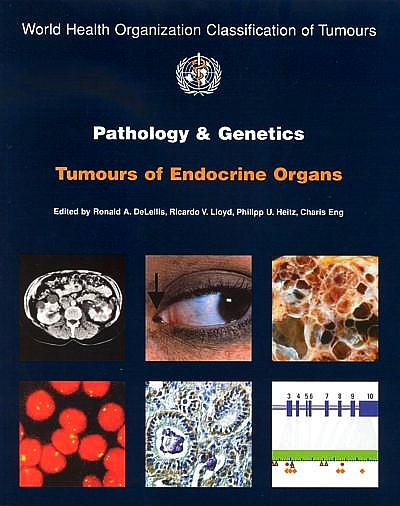
Neoplasms metastatic to the thyroid gland.

Thompson L.
Ear Nose Throat J. 2006 Aug;85(8):480, 483.
FIRST PARAGRAPH: Tumors that occur in the thyroid gland as a result of lymph or vascular spread from distant sites are considered to represent metastatic disease rather than a direct extension of a primary from an adjacent organ. Metastatic deposits are identified at a higher frequency in abnormal glands—that is, those with adenomatoid nodules, thyroiditis, and follicular neoplasms. Further, metastatic deposits may be found within primary thyroid tumors, such as a renal cell carcinoma metastatic to a thyroid papillary carcinoma. Although a thyroid gland mass may be the presenting clinical sign, it is more often the underlying thyroid gland disease (e.g., thyroiditis, adenomatoid nodules) that prompts clinical evaluation. The thyroid gland metastatic deposit is the initial presentation of an occult primary tumor in as many as 40% of patients. Carcinomas are the most common metastatic tumors from (in order of frequency) the kidney (figure 1), lung, breast (figure 2), and stomach; melanoma is less common.
PubMed ID: 16999049
Article Size: <1 MB

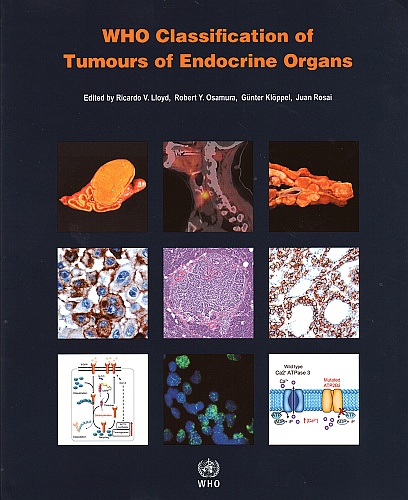
Thyroglossal duct cyst.

Thompson LD.
Ear Nose Throat J. 2017 Feb;96(2):54-55.
FIRST PARAGRAPH: Embryologically, the thyroglossal duct develops as the thyroid anlage descends from the foramen cecum at the base of the tongue to its final resting point in the pretracheal inferior midline neck. The duct usually involutes, but persistence may give rise to a clinical cyst. Thyroglossal duct remnant cysts (TGDCs) are one of the most common neck lesions seen clinically, showing a bimodal age distribution in the first and fifth decades, and identified in approximately 2.2/100,000 population at risk each year. While there is an equal sex distribution, males tend to predominate in pediatric patients while females predominate among adults.
PubMed ID: 28231361
Article Size: <1 MB

Salivary Gland Pathology: SC and PAC

This 60-minute presentation covers two topics: Secretory carcinoma and Acinic cell carcinoma and how to separate between them; and polymorphous adenocarcinoma: PLGA and Cribriform carcinoma. Produced originally during COVID-19 pandemic when residents were not able to obtain their usual education.
TIP: For sharpest focus, you may need to change YouTube’s default quality settings from Auto to 1080p60. Once you start the video, click the Settings cog icon near the lower right corner of video frame, select Quality and change Auto to 1080p. You should also click the Full Screen icon at the far right.


How to use Elsevier’s ExpertPath

TIP: For sharpest focus, you may need to change YouTube’s default quality settings from Auto to 1080p60. Once you start the video, click the Settings cog icon near the lower right corner of video frame, select Quality and change Auto to 1080p. You should also click the Full Screen icon at the far right.


ImmunoQuery Demonstration

TIP: For sharpest focus, you may need to change YouTube’s default quality settings from Auto to 1080p60. Once you start the video, click the Settings cog icon near the lower right corner of video frame, select Quality and change Auto to 1080p. You should also click the Full Screen icon at the far right.